
What Is Crown Thinning?
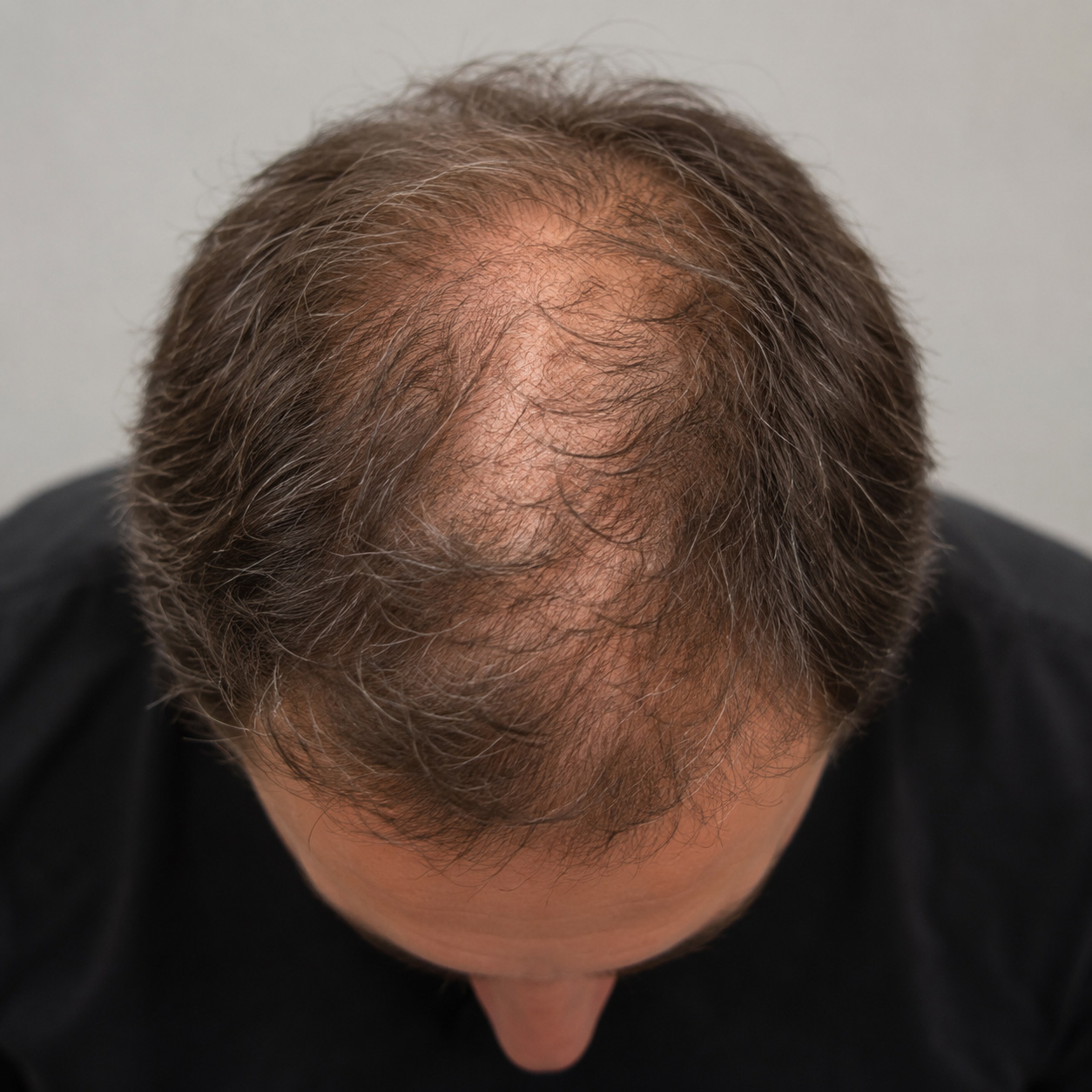
Crown thinning is one of the most common forms of hair loss in both men and women. It usually begins gradually near the crown, also known as the vertex, where hair slowly becomes finer and less dense over time. Because the hair often remains present during the early stages, many people do not realize they are experiencing crown thinning until they notice more scalp showing in photographs, mirrors, or under bright lighting.
Unlike complete baldness, crown thinning often develops while hair continues to grow throughout the area. The problem is not always the amount of hair—it is that the scalp becomes increasingly visible as density decreases.
For many people, this creates the impression that they have lost much more hair than they actually have.
Fortunately, modern cosmetic and medical options can help improve the appearance of crown thinning. Depending on the cause and severity, these may include medications, hair transplantation, scalp micropigmentation (SMP), or MoriTint™ Hair Density Enhancement.
Why Does Crown Thinning Happen?
Several factors can contribute to crown thinning.
Genetics
The most common cause is hereditary hair loss. In men, this is known as male pattern baldness. Women may experience female pattern hair loss, which often appears as diffuse thinning or widening of the part but may also involve the crown.
Hormonal Changes
Hormonal changes associated with aging, menopause, thyroid disorders, or hormonal imbalances can affect hair density.
Aging
Hair naturally becomes finer as we get older. Even individuals who never become completely bald often notice reduced density in the crown.
Stress
Major physical or emotional stress can temporarily increase hair shedding.
Medical Conditions
Autoimmune diseases, nutritional deficiencies, medications, and certain medical conditions may also contribute to thinning hair.
Because crown thinning can result from different causes, anyone experiencing sudden or significant hair loss should seek an evaluation from a qualified healthcare professional.
Early Signs of Crown Thinning
Many people do not recognize crown thinning until it becomes more noticeable.
Common signs include:
- More scalp visible under bright lighting
- Hair appearing flatter than before
- Reduced hair volume
- A small thinning spot developing at the crown
- Difficulty styling the hair
- Hair looking thinner in photographs
- Family members noticing thinning before you do
The earlier crown thinning is identified, the more cosmetic and medical options are typically available.
Why the Crown Appears Thinner Than It Really Is
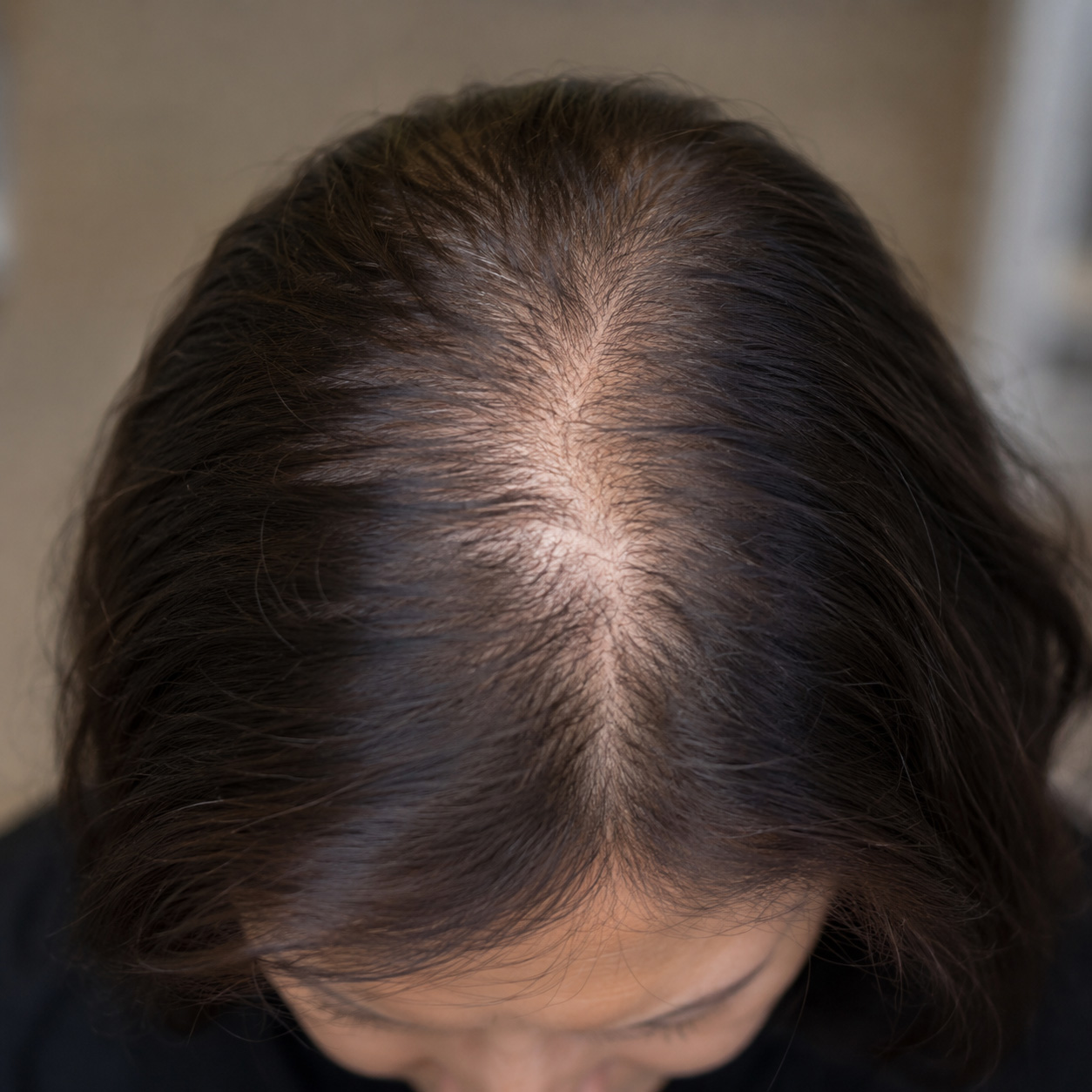
One reason crown thinning is so noticeable is because of the contrast between dark hair and lighter scalp.
As density decreases, overhead lighting reflects off the scalp, making the thinning area appear larger than it actually is.
Many people assume they have lost far more hair than they truly have.
This is why reducing scalp visibility can dramatically improve the appearance of density without actually increasing the number of hairs.
What Is MoriTint™ Hair Density Enhancement?
MoriTint™ is a Korean-inspired cosmetic hair density enhancement procedure designed for people who still have existing hair.
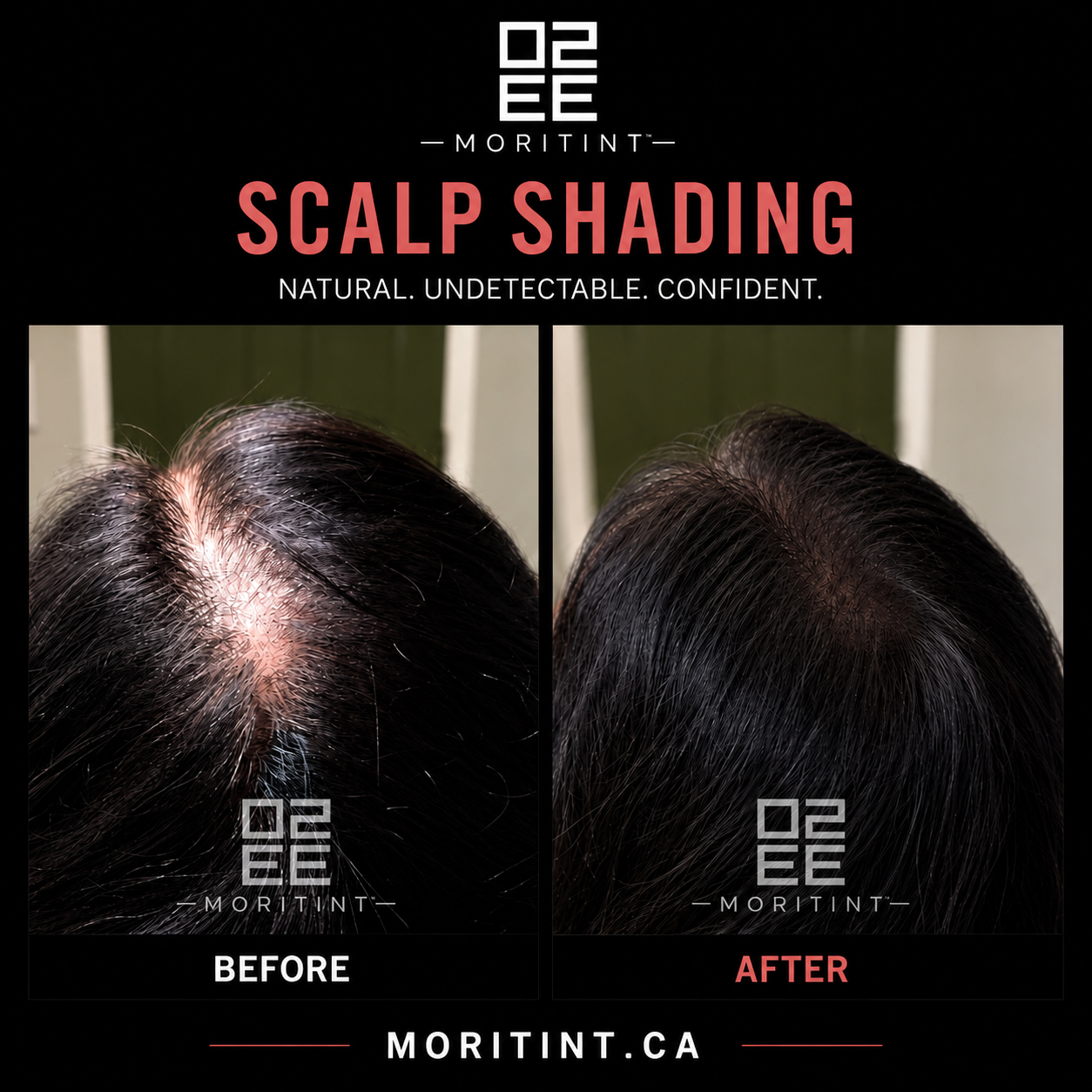
Rather than attempting to grow new hair, MoriTint™ uses advanced scalp tinting to reduce the contrast between the scalp and existing hair.
Ultra-fine pigment shading creates a soft shadow beneath thinning areas, helping the hair appear thicker and fuller.
The result is subtle, natural-looking density enhancement without surgery.
How MoriTint™ Helps Crown Thinning
The crown is one of the best treatment areas for MoriTint™.
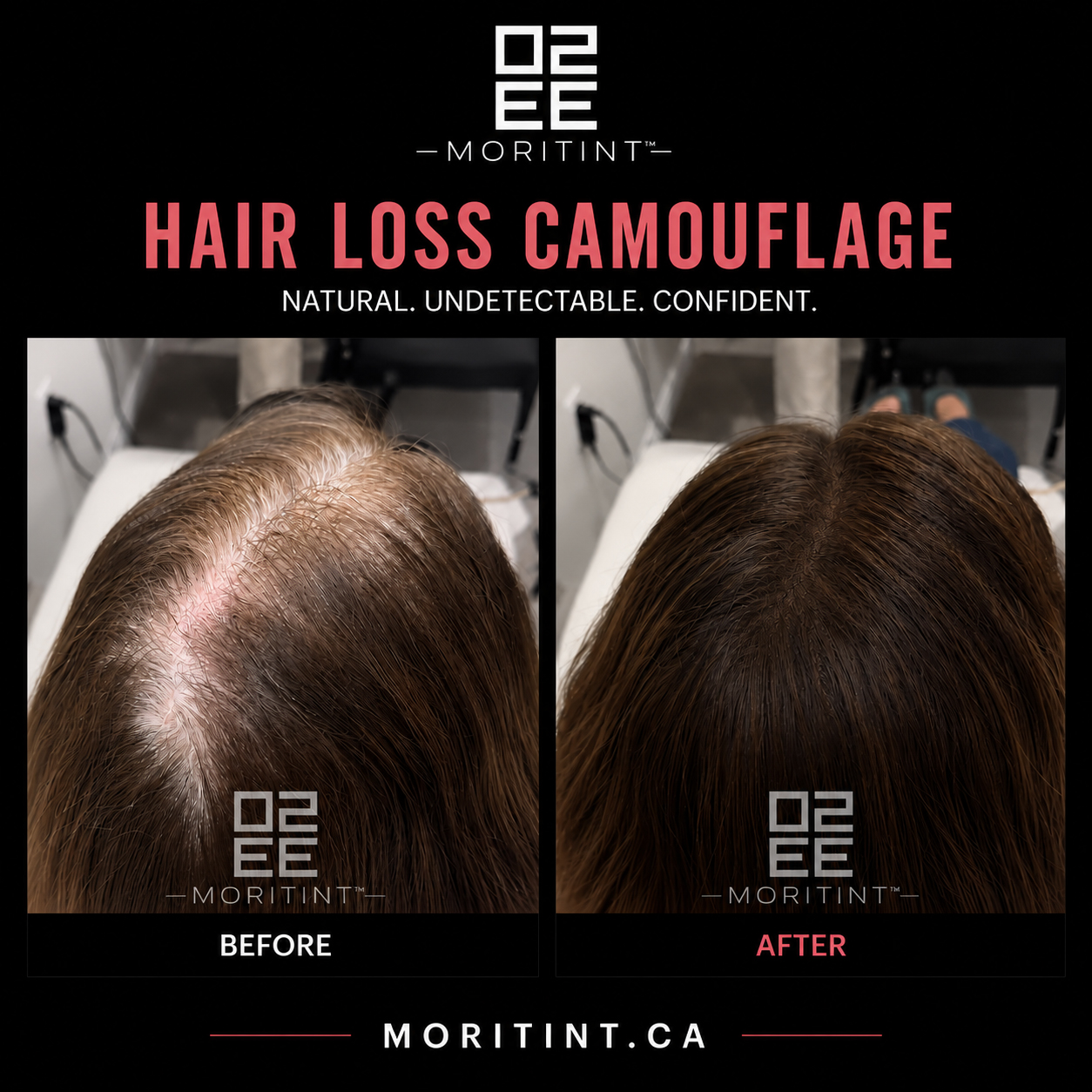
Because many people experiencing crown thinning still have existing hair, the pigment can blend beneath the hair to reduce scalp show-through.
Benefits include:
- Reduces visible scalp
- Creates the appearance of fuller hair
- Improves crown density
- Blends naturally with existing hair
- Soft, diffused appearance
- Non-surgical treatment
- Minimal downtime
- Long-lasting cosmetic enhancement
Many clients are surprised by how much difference reducing scalp contrast can make.
Even though MoriTint™ does not create new hair growth, improving the appearance of density often creates a dramatic cosmetic improvement.
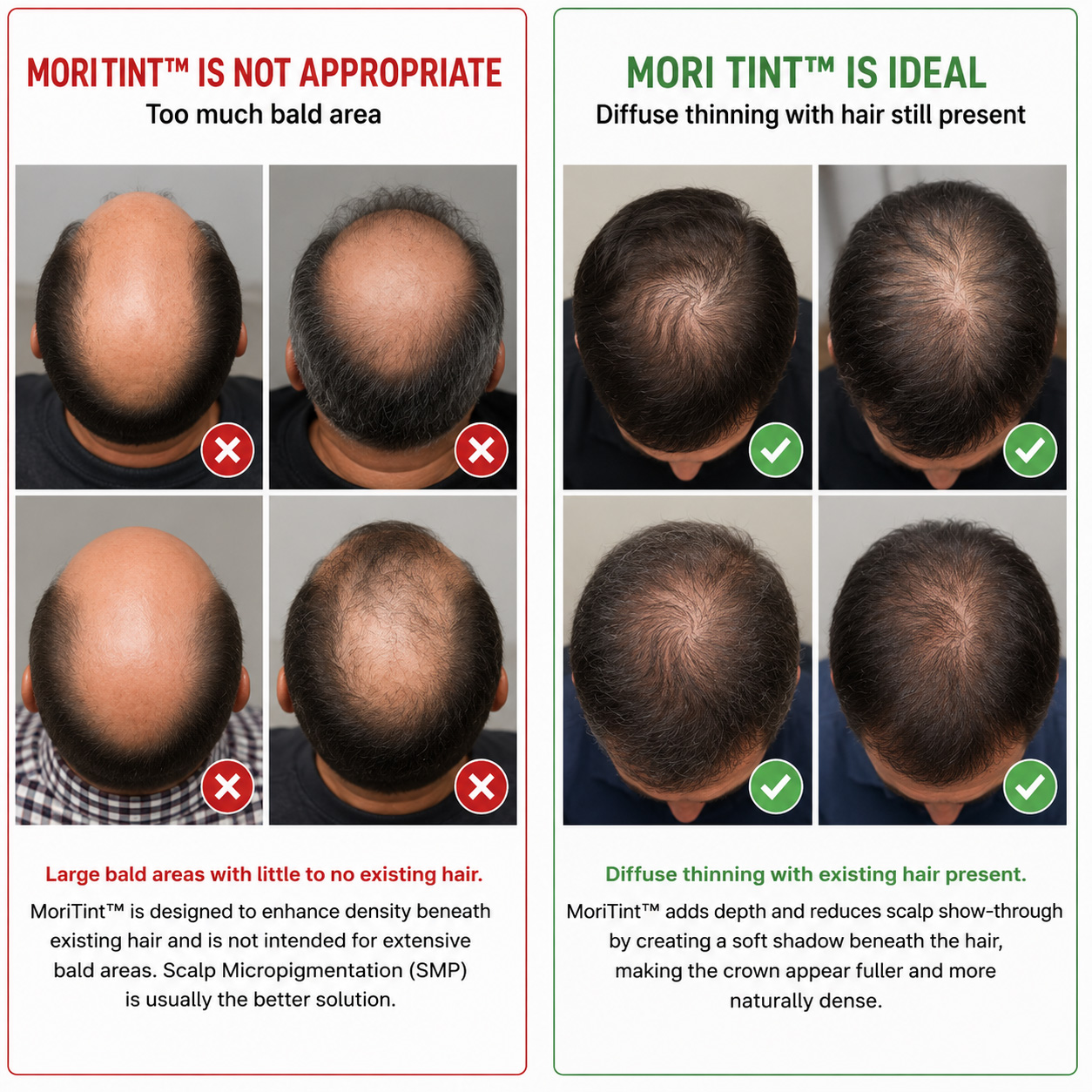
When MoriTint™ Works Best
MoriTint™ generally works best for individuals who:
- Still have hair throughout the crown
- Have diffuse crown thinning
- Notice increased scalp visibility
- Want a natural-looking cosmetic enhancement
- Prefer a non-surgical option
The treatment works by blending beneath existing hair, making thinning less noticeable.
When MoriTint™ May Not Be the Best Choice
If the crown has progressed to a large completely bald area, there may not be enough existing hair for MoriTint™ to blend naturally.
In these situations, traditional scalp micropigmentation (SMP) is often the better cosmetic option.
SMP creates the appearance of closely shaved hair follicles using thousands of tiny pigment impressions.
It is particularly well suited for:
- Large bald areas
- Advanced male pattern baldness
- Buzz-cut hairstyles
- Complete crown baldness
Choosing between MoriTint™ and SMP depends on the amount of existing hair, hairstyle, and desired result.
A consultation can help determine which treatment is most appropriate.
Crown Thinning in Men
The crown is often one of the earliest areas affected by male pattern baldness.
Many men first notice a small thinning spot that gradually enlarges over time.
As density decreases, bright lighting makes the scalp increasingly visible.
For men who still have existing hair, MoriTint™ can create the appearance of greater density while maintaining a natural hairstyle.
Crown Thinning in Women
Although widening parts are more common, many women also experience crown thinning.
Diffuse thinning throughout the top of the scalp may make the crown appear flatter and allow more scalp to show through.
Because women typically maintain longer hairstyles, MoriTint™ is particularly well suited for creating subtle density enhancement beneath existing hair.
The goal is to improve the appearance of fullness while maintaining a completely natural look.
MoriTint™ vs Hair Fibers for Crown Thinning
Many people use hair fibers, sprays, powders, or tinted products to hide thinning crowns.
While these products can be effective, they usually require daily application and may transfer onto pillows, hats, or clothing.
MoriTint™ provides a longer-lasting cosmetic enhancement that helps reduce reliance on daily camouflage products.
MoriTint™ vs Hair Transplants
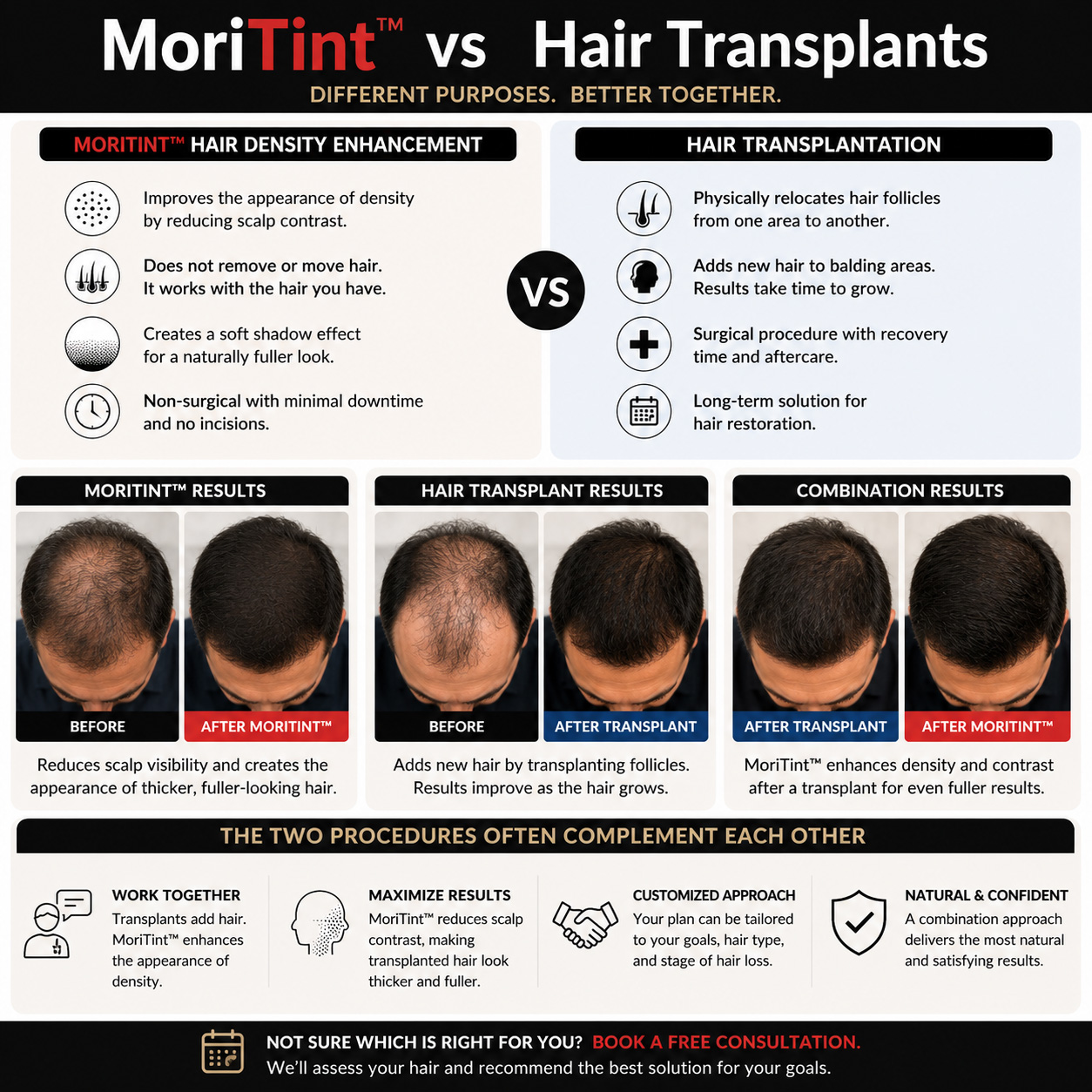
Hair transplantation and MoriTint™ serve different purposes.
Hair transplantation physically relocates hair follicles.
MoriTint™ improves the appearance of density by reducing scalp contrast.
Many transplant patients choose MoriTint™ after surgery to make transplanted hair appear even fuller.
The two procedures often complement each other.
Benefits of MoriTint™ for Crown Thinning
Clients often choose MoriTint™ because it can:
- Create the appearance of thicker hair
- Reduce scalp visibility
- Improve confidence
- Blend naturally with existing hair
- Avoid surgery
- Require little downtime
- Complement other hair restoration treatments
- Produce natural-looking results
Frequently Asked Questions
Does MoriTint™ regrow hair?
No. MoriTint™ is a cosmetic hair density enhancement treatment that creates the appearance of fuller hair by reducing scalp visibility. It does not stimulate new hair growth.
Is MoriTint™ permanent?
No. Maintenance touch-ups are typically recommended every one to two years depending on skin type, sun exposure, lifestyle, and personal preference.
Is MoriTint™ suitable for complete baldness?
Generally no.
MoriTint™ is designed for people who still have existing hair.
Individuals with extensive bald areas are often better candidates for traditional scalp micropigmentation (SMP).
Can MoriTint™ be combined with a hair transplant?
Yes.
Many clients combine MoriTint™ with hair transplantation, PRP therapy, or other hair restoration treatments to maximize the appearance of density.
How many sessions are required?
Most clients complete an initial treatment followed by a required touch-up approximately two weeks later. Maintenance treatments are usually performed every one to two years.
Restore the Appearance of Fuller Hair
Crown thinning is one of the earliest and most noticeable forms of hair loss, but it does not always require surgery.
For people who still have existing hair, MoriTint™ Hair Density Enhancement provides a non-surgical cosmetic solution that helps reduce scalp visibility and create the appearance of thicker, fuller-looking hair.
Because the treatment blends naturally beneath existing hair, it is particularly effective for diffuse crown thinning and early-stage density loss.
For larger bald areas with little or no remaining hair, traditional scalp micropigmentation (SMP) may be the more appropriate cosmetic option.
The best treatment depends on your current hair coverage, hairstyle, and goals.
Book a free consultation today
Find out whether MoriTint™ Hair Density Enhancement is the right solution for your crown thinning.