Female Hair Loss Is More Common Than Many Women Realize
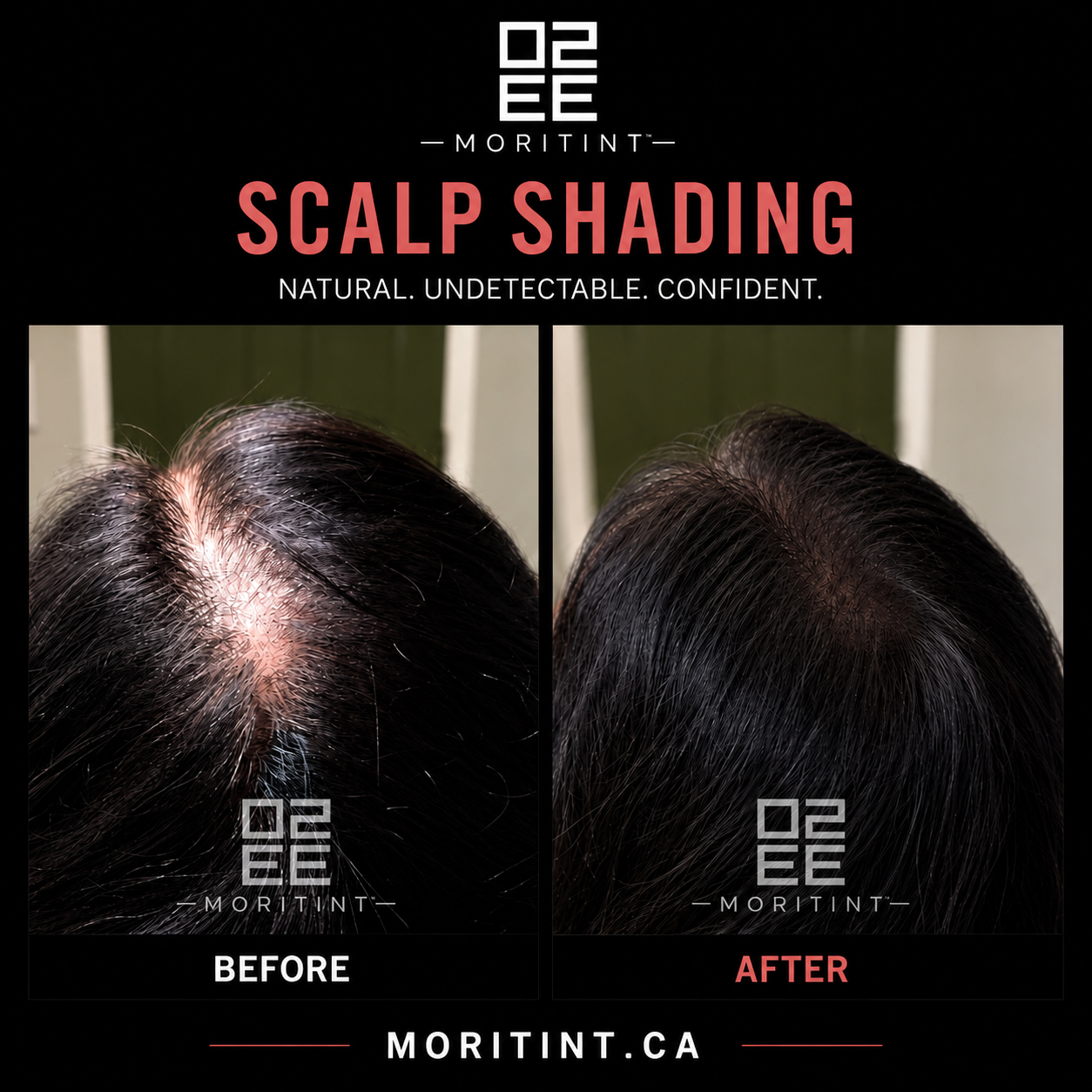
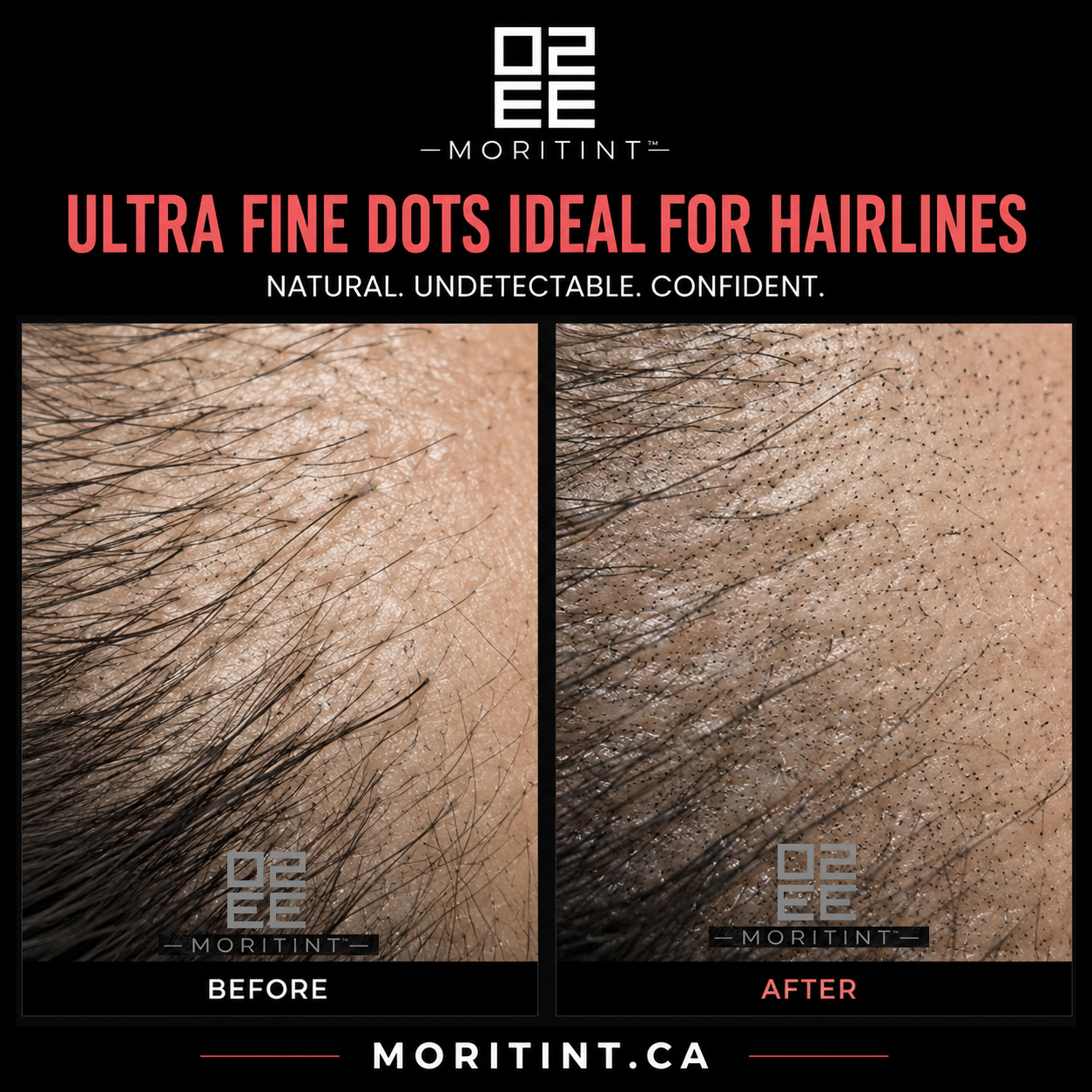
Female hair loss affects millions of women and can have a significant emotional impact. While losing 50 to 100 hairs each day is considered normal, many women notice gradual thinning that makes their hair appear less dense over time. Unlike male pattern baldness, women are more likely to experience diffuse thinning across the scalp, widening parts, or increased scalp visibility while still retaining much of their hair.For many women, hair is closely connected to confidence, self-image, and femininity. Even mild thinning can affect the way someone feels about their appearance, leading them to change hairstyles, avoid bright lighting, spend more time styling their hair, or rely on temporary cosmetic products.Although there are many causes of female hair loss, there are also many ways to manage its appearance. Depending on the underlying cause, treatment may involve medical therapies, lifestyle changes, or cosmetic solutions. One of the newest cosmetic options available in Canada is MoriTint™ Hair Density Enhancement, which helps create the appearance of fuller-looking hair by reducing the contrast between the scalp and existing hair.

Understanding Female Hair Loss
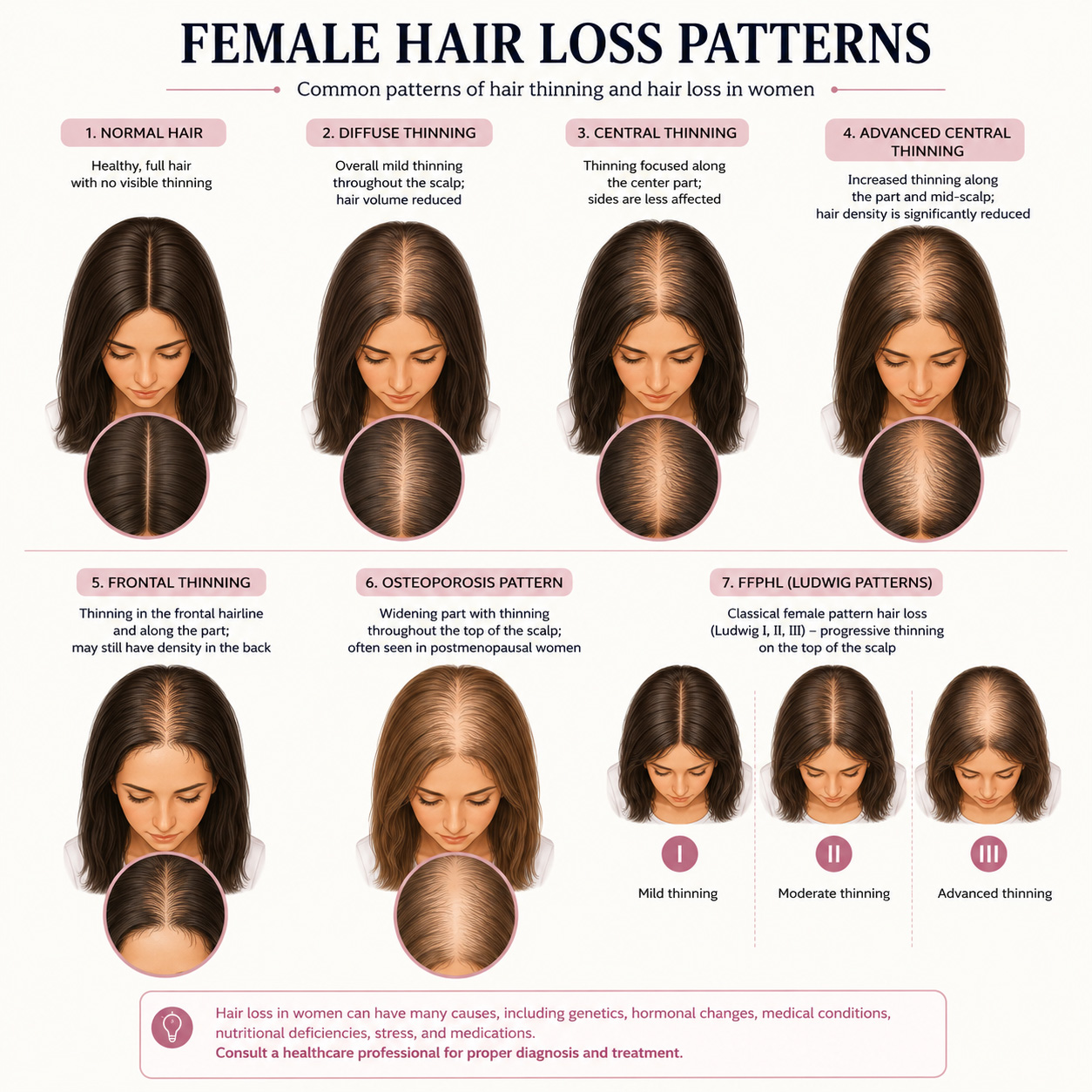
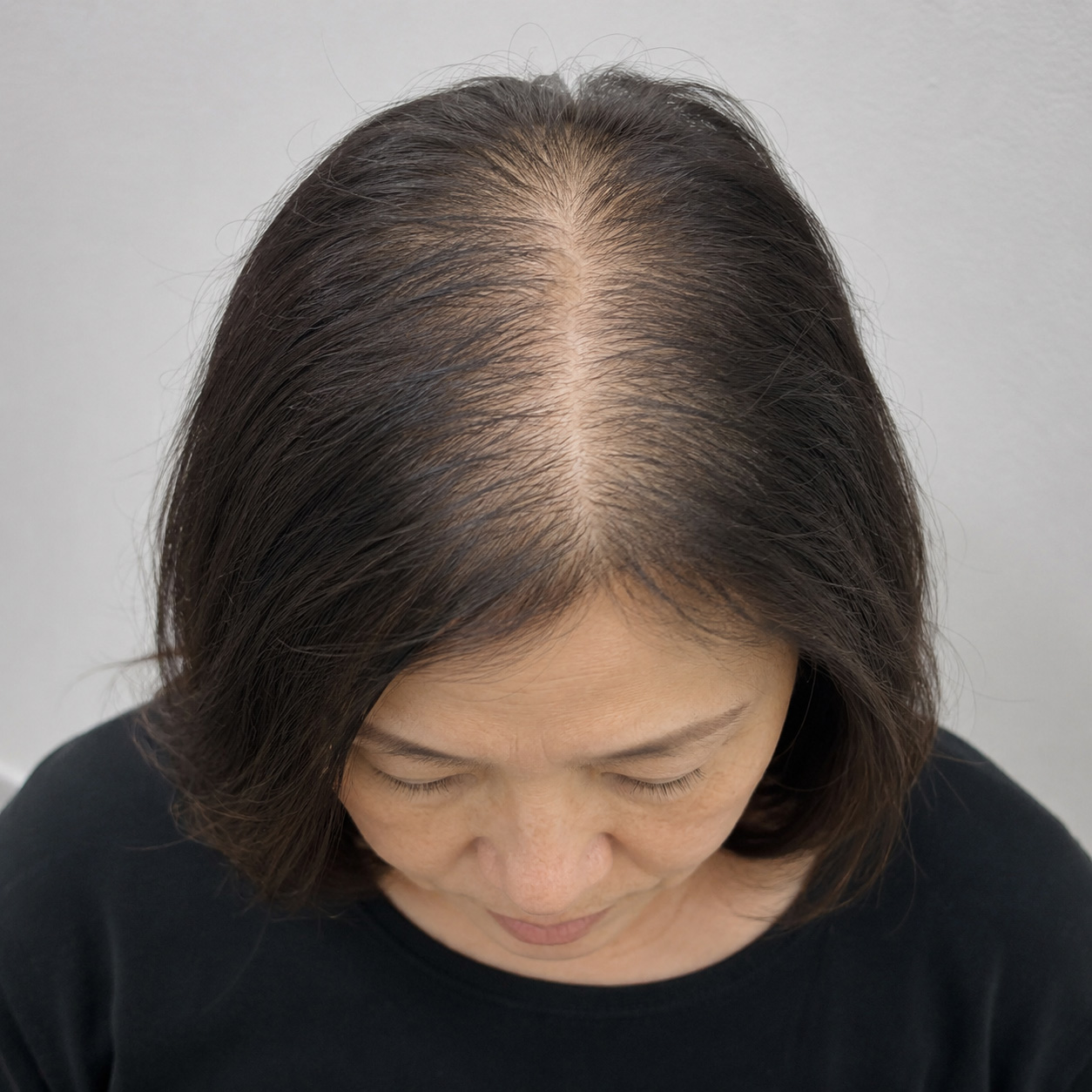
Hair thinning in women usually develops gradually. Instead of creating complete bald areas, it often causes hair to become finer and less dense, allowing more of the scalp to show through.Common signs include: A widening part Increased scalp visibility Diffuse thinning across the top of the scalp Reduced hair density A thinner ponytail Less volume than before More scalp visible under bright lightingBecause these changes often happen slowly, many women do not notice them until they compare older photographs or someone else points them out.
Common Causes of Female Hair Loss
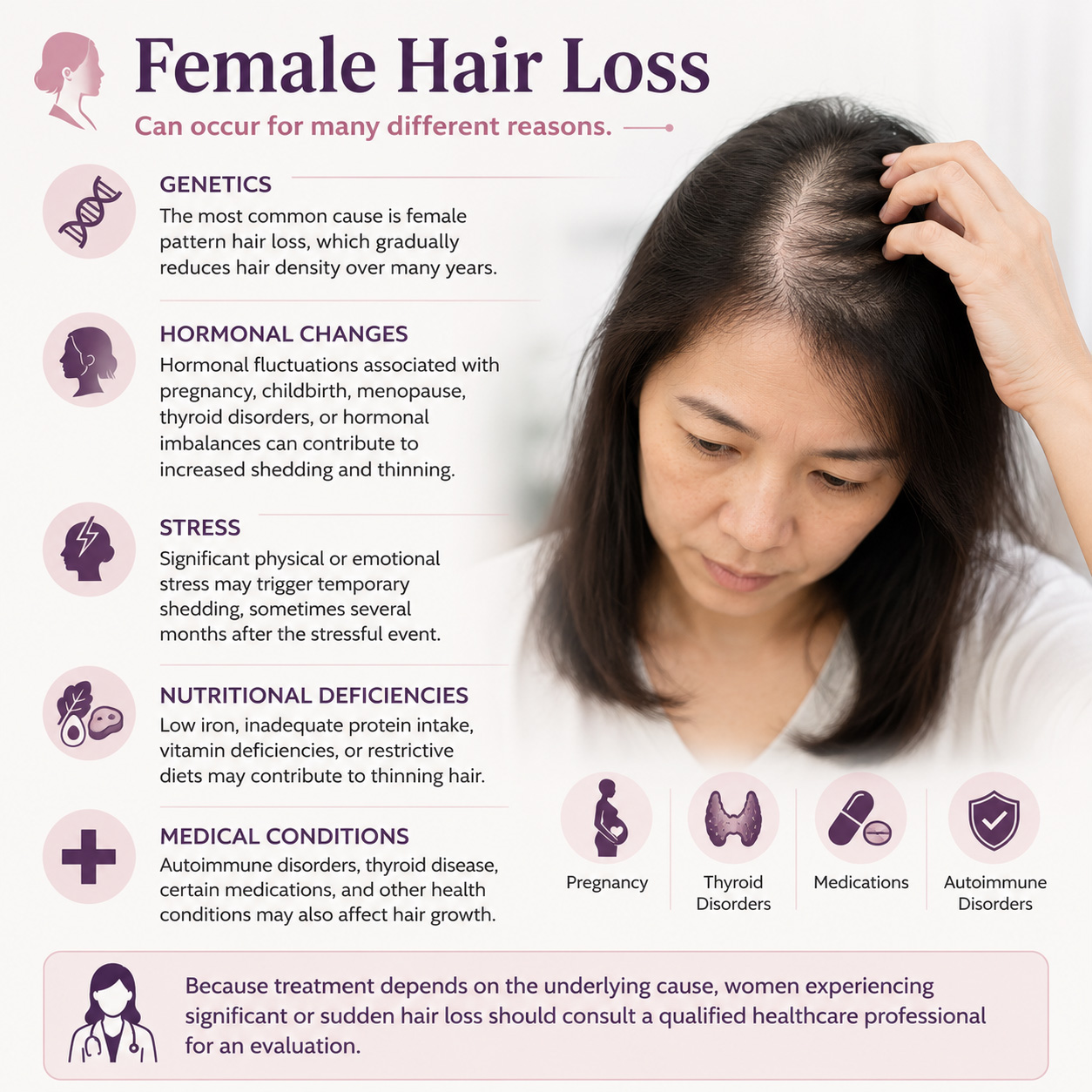
Female hair loss can occur for many different reasons.
Genetics
The most common cause is female pattern hair loss, which gradually reduces hair density over many years.
Hormonal Changes
Hormonal fluctuations associated with pregnancy, childbirth, menopause, thyroid disorders, or hormonal imbalances can contribute to increased shedding and thinning.
Stress
Significant physical or emotional stress may trigger temporary shedding, sometimes several months after the stressful event.
Nutritional Deficiencies
Low iron, inadequate protein intake, vitamin deficiencies, or restrictive diets may contribute to thinning hair.
Medical Conditions
Autoimmune disorders, thyroid disease, certain medications, and other health conditions may also affect hair growth.
Because treatment depends on the underlying cause, women experiencing significant or sudden hair loss should consult a qualified healthcare professional for an evaluation.