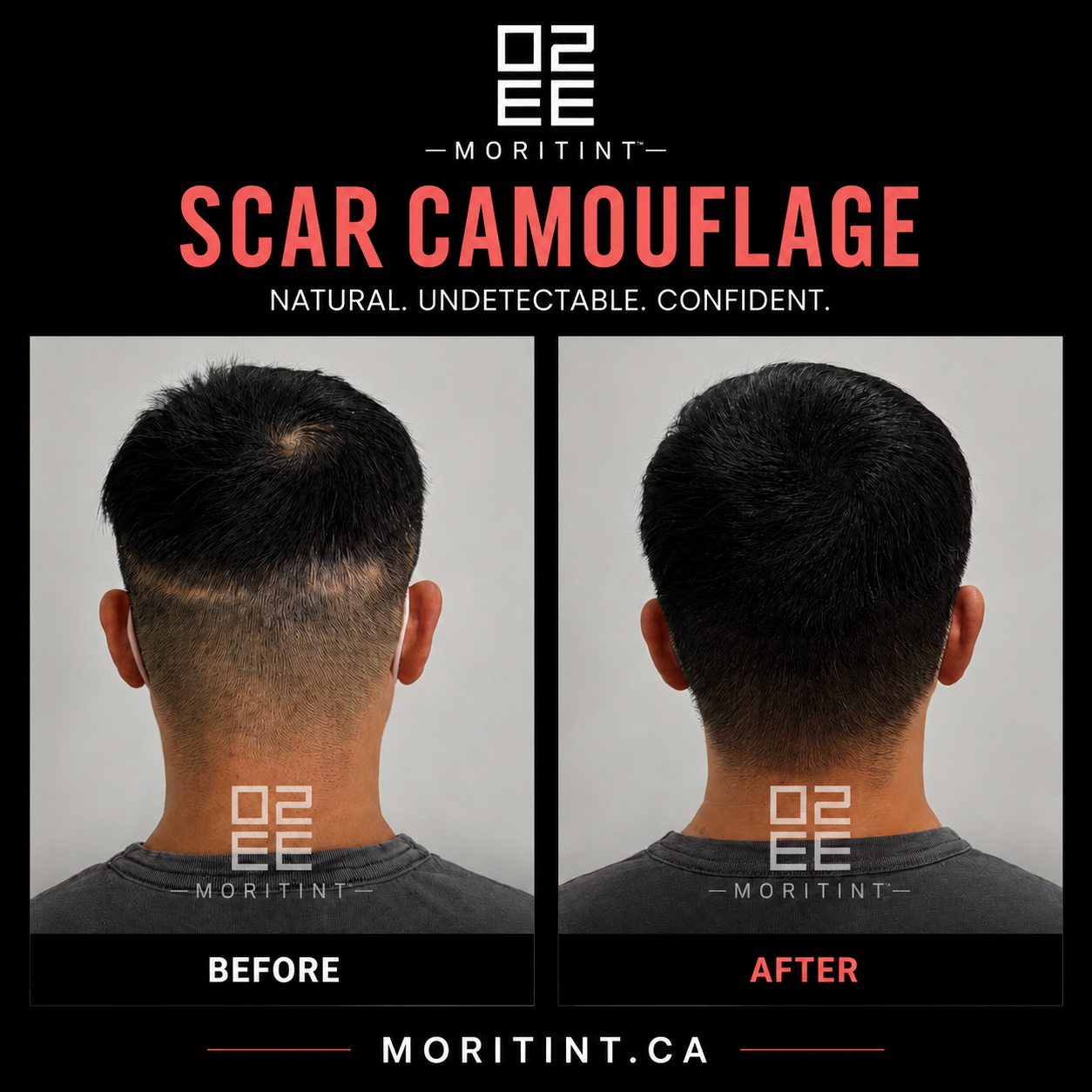
Hair Transplant Density – Why Your Hair May Still Look Thin
A hair transplant can restore hair to thinning or bald areas, but many people are surprised to find that even after a successful procedure, their hair may not appear as thick as they expected.
The reason is simple: while transplanted hair grows, it rarely matches the natural density you once had.
If you’re unhappy with visible scalp after a hair transplant, MoriTint Hair Density Enhancement can help reduce scalp visibility and create the appearance of thicker, fuller hair—without another surgical procedure.
Why Doesn’t a Hair Transplant Restore Full Density?
Hair transplantation works by moving hair follicles from one part of your scalp (the donor area) to areas where hair has been lost.
However, donor hair is limited.
A surgeon cannot transplant every follicle from the donor area because doing so would create visible thinning where the hair was taken from.
As a result, transplanted hair is carefully spaced to achieve natural coverage rather than maximum density.
Even when the procedure is technically successful, more scalp may remain visible than many patients expect.
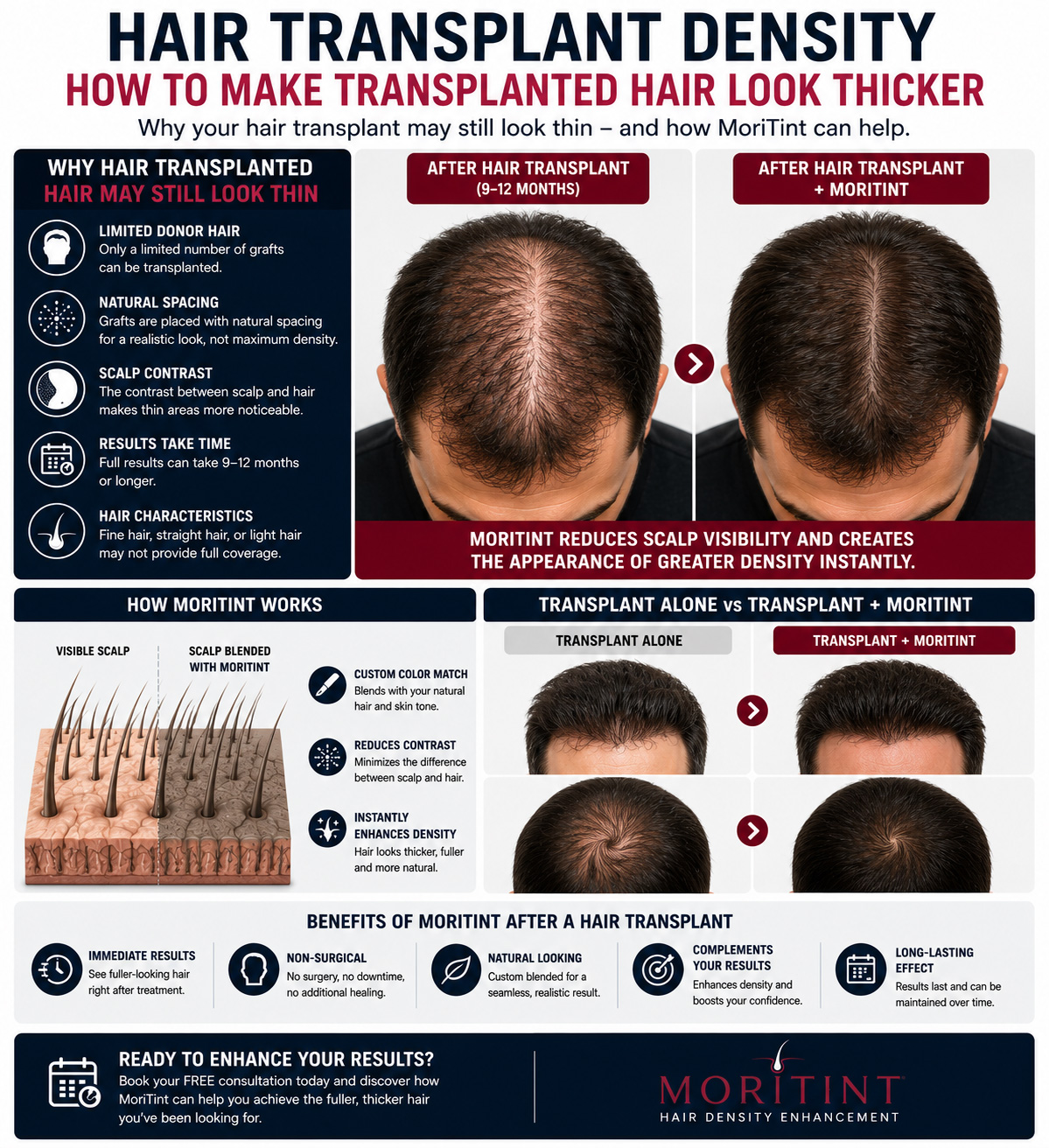
What Affects Hair Transplant Density?
Several factors influence the final appearance of density after a transplant.
Available Donor Hair
The amount of donor hair limits how many grafts can be transplanted.
Hair Thickness
People with thicker hair often achieve the appearance of greater density than those with naturally fine hair.
Hair Colour
Light hair against light skin usually creates less contrast than dark hair against fair skin.
Curl or Wave
Curly or wavy hair naturally provides more visual coverage than straight hair.
Degree of Hair Loss
Extensive hair loss often requires grafts to be spread over a larger area.
Why Does My Scalp Still Show?
This is one of the most common questions after a transplant.
Even though new hair grows successfully, spaces between individual hairs still allow the scalp to show through.
Bright lighting, wet hair, or certain hairstyles can make these gaps even more noticeable.
This doesn’t necessarily mean your transplant failed—it simply means the available grafts could not recreate your original hair density.
How MoriTint Helps Improve Hair Transplant Density
MoriTint is designed to reduce the contrast between your scalp and your hair.
Instead of trying to grow more hair, MoriTint subtly blends the visible scalp with your natural hair colour.
As a result:
- Less scalp is visible.
- Existing hair appears thicker.
- Hair appears denser.
- Overall cosmetic results improve immediately.
Many transplant patients find that MoriTint helps complete their final look.
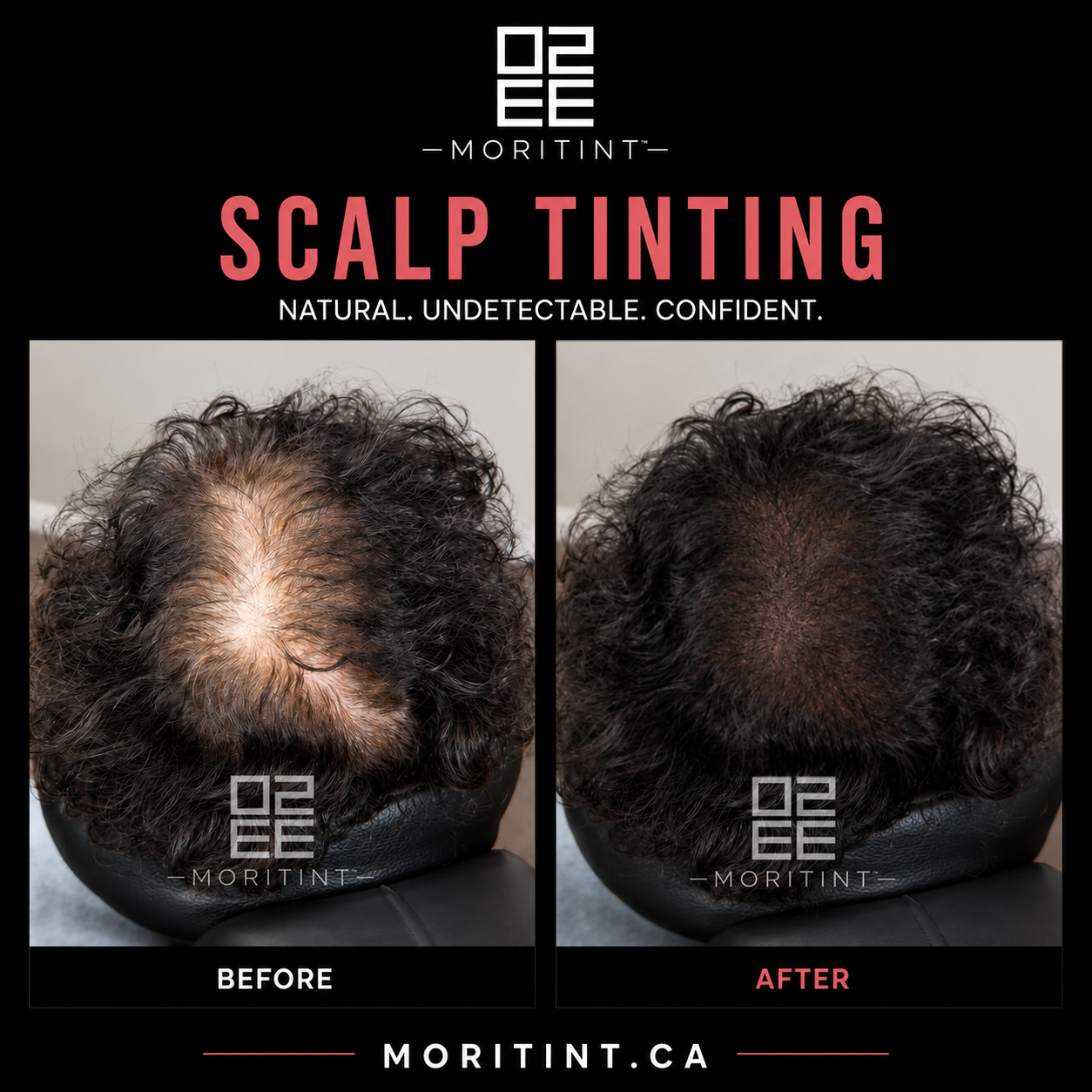
Should You Have a Second Hair Transplant?
Some people choose a second transplant to increase density.
However, this depends on several factors, including:
- Remaining donor hair.
- Overall scalp health.
- Hair-loss progression.
- Surgical goals.
If donor hair is limited, a second transplant may not provide a dramatic increase in density.
MoriTint may offer a non-surgical way to improve the appearance of fullness without requiring additional surgery.
MoriTint After a Hair Transplant
Many clients choose MoriTint after their transplant has fully healed because it can:
- Reduce scalp visibility.
- Improve the appearance of density.
- Blend transplanted and existing hair.
- Enhance cosmetic results.
- Increase confidence.
The treatment is customized to your natural hair colour for a subtle, realistic appearance.
Benefits of MoriTint for Hair Transplant Patients
Immediate Results
See fuller-looking hair right after treatment.
Non Surgical
No additional surgery.
No recovery time.
Natural Appearance
Professionally colour matched to your hair.
Complements Hair Transplants
Works with your existing transplanted hair rather than replacing it.
Book Your Free Consultation Today Or Call 647-492-6040
Personalized Treatment
Every treatment is tailored to:
- Hair colour
- Skin tone
- Hair density
- Hair texture
- Hair-loss pattern
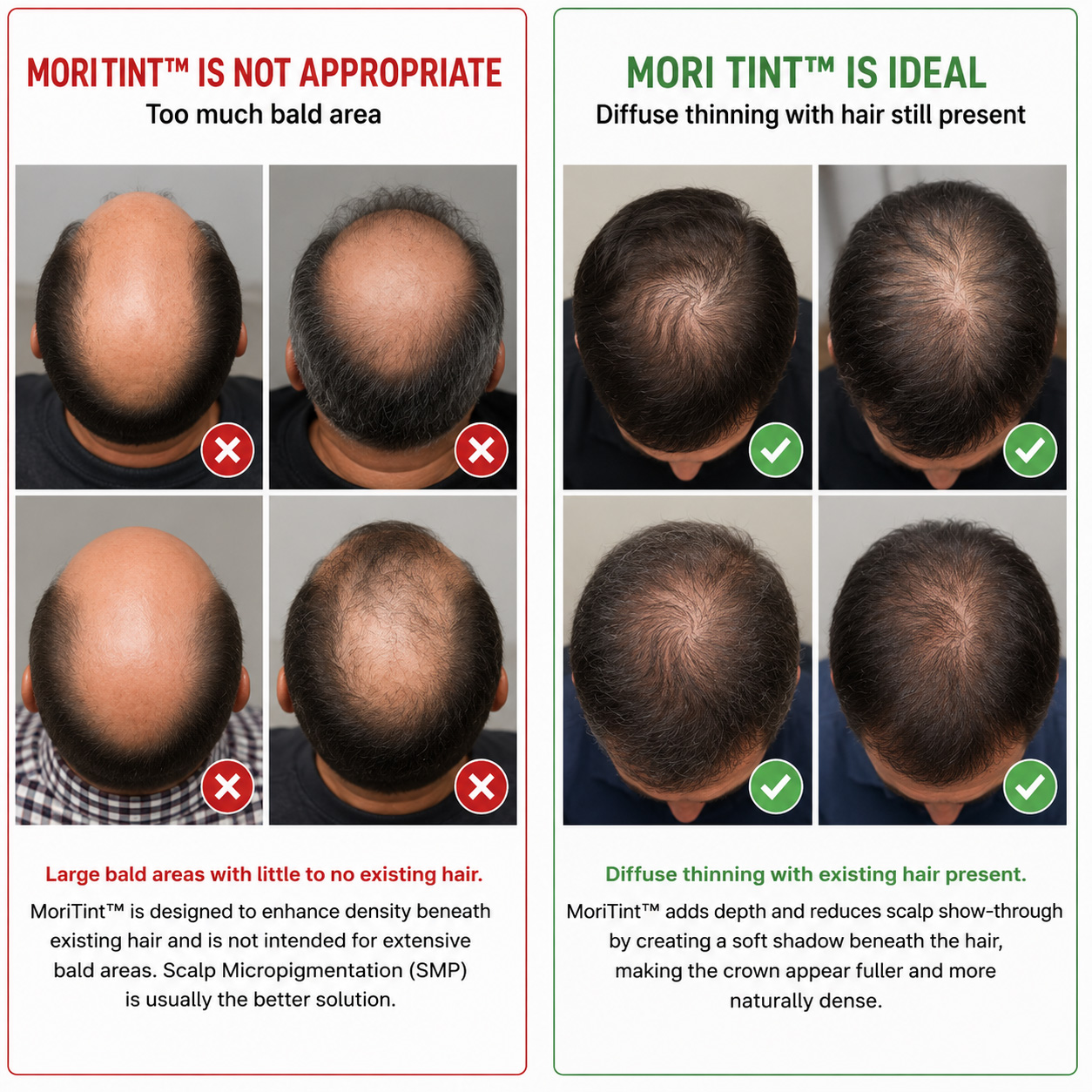
Hair Transplant Alone vs Hair Transplant + MoriTint
| Hair Transplant Alone | Hair Transplant + MoriTint |
|---|---|
| Restores hair growth | Restores hair growth + reduces scalp visibility |
| Density depends on donor hair | Hair appears denser immediately |
| May still show scalp | Less scalp visible |
| Surgical procedure | Non-surgical enhancement |
| Results improve gradually | Cosmetic improvement immediately after treatment |
Frequently Asked Questions
Does MoriTint replace a hair transplant?
No. MoriTint is designed to complement existing hair by improving its appearance rather than replacing surgical restoration.
How long should I wait after a transplant?
Your surgeon should advise when your scalp has healed sufficiently before considering any cosmetic scalp treatment.
Can MoriTint damage transplanted hair?
When performed appropriately on a fully healed scalp, MoriTint is designed to enhance appearance without harming existing hair.
Can women benefit too?
Yes. Women who have undergone hair transplantation and still experience visible scalp can also benefit.
Is MoriTint permanent?
Results are long-lasting but gradually fade over time. Maintenance treatments help preserve the appearance.
Why Choose MoriTint?
At MoriTint, we help clients maximize the appearance of their existing hair—whether it is natural, transplanted, or both.
Our customized Hair Density Enhancement treatments are tailored to your hair colour, skin tone, and cosmetic goals, creating a natural-looking improvement without additional surgery.
Book Your Complimentary Consultation
If you’ve had a hair transplant but still wish your hair looked thicker, MoriTint may be the finishing touch you’ve been looking for.
Book your free consultation today to discover how Hair Density Enhancement can help reduce scalp visibility and create the appearance of fuller, denser hair.